Myth & Folklore
Aboriginal Australian Dreaming is not about dreams
The English word is a nineteenth-century translation of concepts it does not fit, and the confusion it created has been remarkably durable. What the term actually refers to is something else entirely.
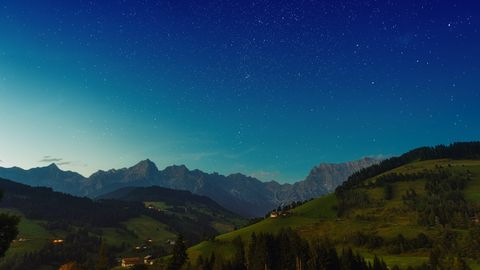
"The Dreaming" and "Dreamtime" are among the more misleading translations in the anthropological record. They have led generations of outside readers to assume that Aboriginal Australian cosmology is centrally concerned with dreams. It is not.
Where the word came from
The English terms derive from work by Francis Gillen and Baldwin Spencer in the 1890s among the Arrernte people of Central Australia. They rendered the Arrernte word altyerre — sometimes written alcheringa — as "dream times".
Arrernte scholars and linguists have argued at length that this was a poor translation. Altyerre carries meanings closer to eternal, uncreated, the law, the source, that which always was. Its connection to the ordinary word for dreaming exists but is peripheral. Once "Dreamtime" entered English it was applied across the continent to hundreds of distinct languages and cultures with entirely different terms — Tjukurpa in Pitjantjatjara, Jukurrpa in Warlpiri, Ngarrankarni in Gija, Wongar in parts of Arnhem Land — flattening enormous diversity into one English label.
Roughly: the creative period in which ancestral beings travelled the land, formed its features, established the species, and laid down law and relationship — and the ongoing reality of that order in the present. It is simultaneously a founding era and a continuing condition. It is not confined to the past, and it is not a story about sleep.
Why "time" is also wrong
The English word imposes a linear sequence — a period that happened and ended. Anthropologist W.E.H. Stanner, writing in 1953, described it instead as "everywhen": the ancestral events are not over. They are present in country, in law, in ceremony and in people.
The ancestral beings did not merely make the landscape; in many accounts they became it. A particular rock formation is not a memorial to an ancestor — it is the ancestor. This is why specific sites carry obligations, why damage to them is not comparable to damage to a monument, and why the destruction of the Juukan Gorge rock shelters in 2020 was understood by the Puutu Kunti Kurrama and Pinikura peoples as something considerably more serious than the loss of an archaeological site.
Songlines
The ancestral journeys are recorded in song cycles that follow specific routes across country, often for enormous distances and across many language groups. Each group holds the section of the cycle corresponding to its own country, and the cycle continues in the next group's language.
They function simultaneously as sacred narrative, legal charter, genealogy, and navigational and ecological record — encoding water sources, seasonal resources and route knowledge in a form that survives across generations without writing.
Bruce Chatwin's 1987 book The Songlines brought the concept to a wide readership and is regarded by many Aboriginal people and anthropologists as substantially romanticised and unreliable, mixing observation with Chatwin's own theories about nomadism.
Where dreams do come in
There is a genuine connection, and it is more specific than the English term suggests.
In a number of Aboriginal traditions, dreams are a recognised channel through which new songs, designs and ceremonies are received from ancestral sources. An individual may dream a song, which is then brought to the community, verified by senior custodians, and — if accepted — incorporated. The Warlpiri and other Central Desert peoples have documented practices of this kind.
So dreaming is one route of transmission within the system. It is not what the system is about, and the English name has caused the part to be mistaken for the whole for well over a century.
What outsiders get wrong
Beyond the translation, three recurring errors.
Treating it as mythology in the Greek sense — a set of stories about the past. It is closer to a legal and ontological framework governing relationships between people, species and places in the present.
Assuming it is uniform. There were hundreds of languages and distinct cultural groups across the continent. Generalising from one to all is like describing "European religion".
Assuming the knowledge is public. Much of it is restricted — by gender, by initiation status, by clan. Some accounts published in the twentieth century were obtained and printed in ways that violated those restrictions, and remain a live grievance.
Why it belongs in a discussion of dreams
Precisely because of the mistranslation, and what it demonstrates.
The English-speaking world encountered a sophisticated cosmology, reached for the nearest available word, and produced a term that has shaped outside understanding for over a century in a direction its speakers did not intend. Aboriginal writers and linguists have been correcting it for decades, and "Dreamtime" persists in tourist literature and school curricula because it is evocative.
It is a useful reminder that dream traditions from other cultures rarely map onto the categories we bring to them — and that the mapping error is usually invisible to the people making it.
Also by Priya Raghunath
- Dream incubation: the ancient practice of sleeping somewhere on purposeMyth & Folklore
- Jung, archetypes and the collective unconscious: a sceptical readingSymbols & Meaning
- The mare, the hag and the jinn: how one physiological event became a global folkloreMyth & Folklore
- Ancient Mesopotamian dream omens and the world's first dream manualMyth & Folklore