Nightmares & Disorders
When Dreams Are Acted Out: REM Sleep Behaviour Disorder
The paralysis that normally accompanies dreaming sleep can fail, allowing dreams to be physically enacted, and the condition carries significant implications beyond the immediate risk of injury.
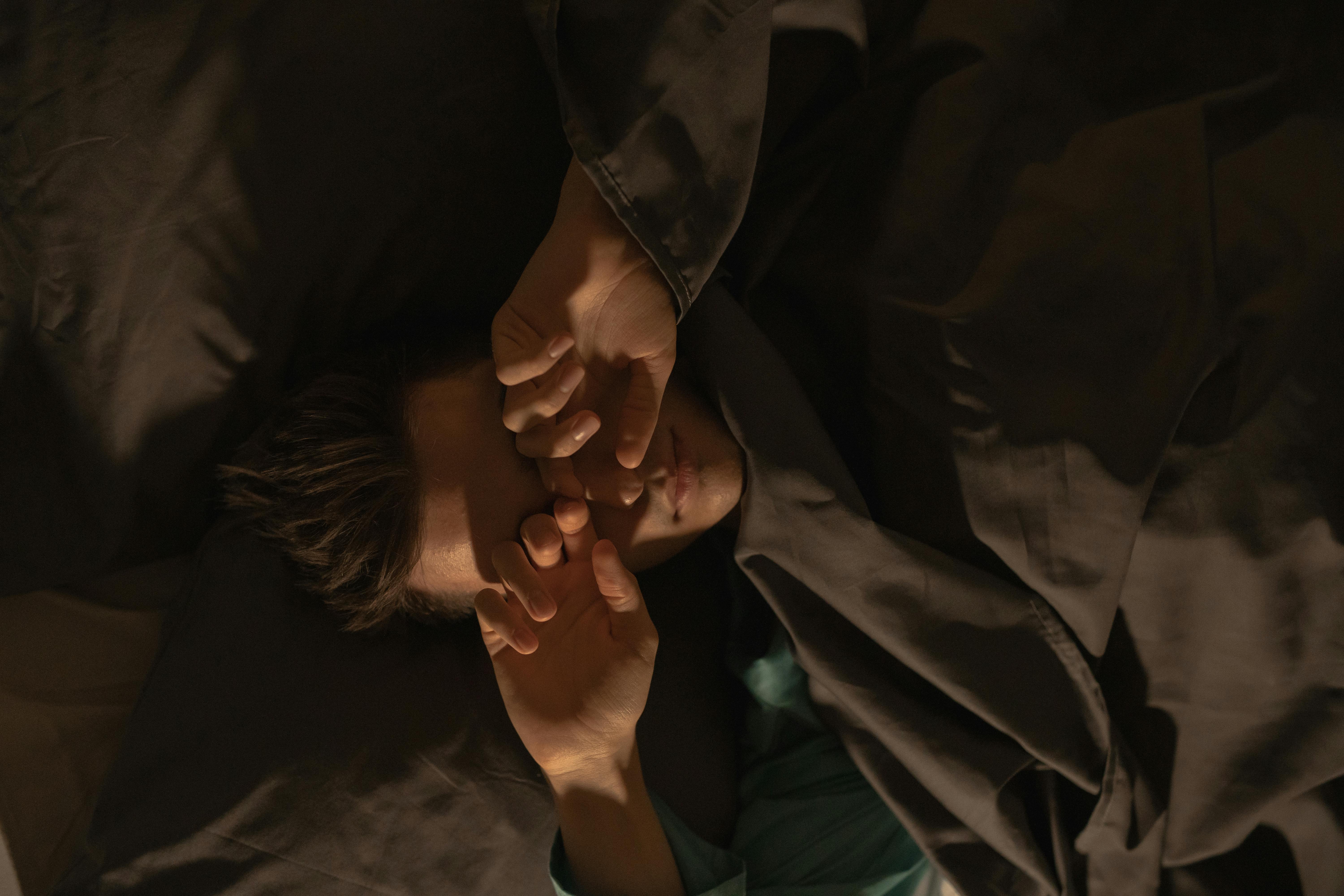
During dreaming sleep the body is normally held still by an active paralysis of the skeletal muscles. When that mechanism fails, the dream is enacted, sometimes violently.
The paralysis and what it is for
Dreaming sleep involves motor commands being generated much as they are in waking. The commands are then blocked before reaching the muscles by an inhibitory system in the brainstem.
This is why dreamed movement produces no actual movement, beyond small twitches at the extremities where the block is least complete.
The arrangement is presumably protective, since a body that executed dreamed actions would be at considerable risk in any environment.
What happens when the block fails
In this disorder the inhibition is incomplete, and movements corresponding to dream content occur. People punch, kick, shout, leap from bed and occasionally run.
The enacted dreams are disproportionately confrontational, often involving defending oneself or another from attack, which is what makes the movements forceful.
Injuries to the sleeper and to a bed partner are common, and the disorder is frequently first raised by the partner rather than the person experiencing it.
How it is distinguished from sleepwalking
Sleepwalking arises from deep slow-wave sleep early in the night, and the sleepwalker is disoriented, difficult to rouse and remembers nothing afterwards.
Enacted dreaming arises later in the night from dreaming sleep, and the person wakes quickly, is immediately oriented, and can usually describe a dream matching the movements observed.
That correspondence between reported dream and observed action is the distinguishing feature, and it is one of the few places where a dream report can be checked against an external record.
Why it matters beyond the injuries
The disorder is strongly associated with later development of certain neurodegenerative conditions affecting the same brainstem systems, often many years afterwards.
This association is well documented and is the main reason the condition warrants proper medical assessment rather than practical management alone.
The relationship is not a certainty for any individual, and framing it as one causes unnecessary alarm. It is a reason for follow-up, and that discussion belongs with a neurologist or sleep specialist.
What assessment involves
Diagnosis requires an overnight study recording muscle tone during dreaming sleep, since the defining abnormality is the absence of the expected loss of tone.
A partner's account is valuable but not sufficient, because several other conditions produce nocturnal movement and they are managed differently.
Making the sleeping environment safe is the immediate priority in the meantime, and anyone recognising this pattern should be assessed rather than reassured by an article.
Also by Priya Raghunath
- Dream incubation: the ancient practice of sleeping somewhere on purposeMyth & Folklore
- Jung, archetypes and the collective unconscious: a sceptical readingSymbols & Meaning
- The mare, the hag and the jinn: how one physiological event became a global folkloreMyth & Folklore
- Ancient Mesopotamian dream omens and the world's first dream manualMyth & Folklore