Myth & Folklore
Sleep in the pre-industrial world: did people really sleep twice?
A historian found hundreds of references to a "first sleep" and a "second sleep" in pre-modern texts. The claim that this was the natural human pattern is more contested than the popular version admits.
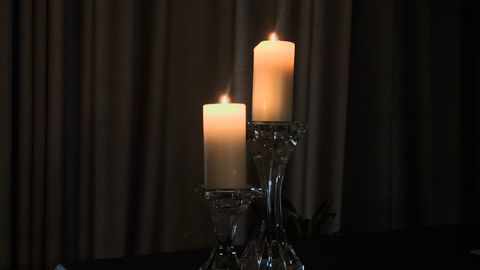
In 2001, the historian A. Roger Ekirch published research based on more than five hundred references in diaries, court records, medical texts, literature and devotional writing from pre-industrial Europe, describing sleep divided into two distinct periods.
People went to bed shortly after dark, slept for three or four hours — the first sleep — woke for an hour or more, and then slept again until morning — the second sleep.
The references are casual rather than explanatory, which is what makes them persuasive. Writers mention the first sleep the way one might mention breakfast, assuming the reader knows what it is. The pattern appears in Chaucer, in Cervantes, in medical advice about which position to lie in during each sleep, and in depositions describing what a witness was doing between them.
What people did in the interval
Ekirch's sources describe the waking period as a quiet, unhurried time. People prayed — devotional manuals included prayers specifically for use between sleeps. They talked with a bed partner. They had sex, with one sixteenth-century French physician recommending it as the better time for conception on the grounds that both parties had rested. They tended fires, checked animals, smoked, and visited neighbours.
And they attended to their dreams. Ekirch notes that waking directly out of the first sleep — which would be REM-rich by that point — placed people in immediate contact with dream content, and that the interval was a customary time for reflecting on it. He argues this contributed to the far greater weight given to dreams in pre-modern life.
Thomas Wehr, at the US National Institute of Mental Health, placed participants in 14 hours of darkness nightly for a month, approximating a midwinter night before artificial light. After several weeks their sleep settled into a segmented pattern: roughly four hours, a period of quiet wakefulness of one to three hours, then a further four hours.
The waking interval was characterised by elevated prolactin and a distinctive calm, meditative state that participants described as unlike ordinary wakefulness.
The case against
The popular version of this — that segmented sleep is natural and monophasic sleep is a modern aberration causing insomnia — goes beyond what the evidence supports, and several lines of criticism deserve weight.
Anthropological data. Jerome Siegel's group studied three pre-industrial hunter-gatherer and horticulturalist societies without electric light — the Hadza in Tanzania, the San in Namibia, and the Tsimane in Bolivia — using actigraphy. They found sleep of around 5.7 to 7.1 hours, in a single consolidated period, with no evidence of routine segmentation. If segmented sleep were the natural human pattern, these are the populations where it should appear.
Seasonality. Wehr's participants experienced a 14-hour night, corresponding to midwinter at high latitude. Ekirch's sources are largely from northern Europe. Segmentation may be a response to very long nights rather than a species-typical pattern — a way of distributing a modest sleep requirement across an excessive dark period.
Source bias. Written records over-represent the literate and the northern. Absence of references to segmented sleep in other literatures is harder to interpret than presence.
Class and comfort. Bedding, heating and the physical conditions of a pre-industrial night were considerably worse than now, and waking during the night may reflect discomfort as much as design.
Where it leaves the insomnia claim
The most commonly drawn practical conclusion is that middle-of-the-night waking is normal and should not be treated as insomnia.
There is something in this, and it is worth stating carefully. Brief awakenings during the night are entirely normal at any age — everyone has them, most are not remembered, and the belief that healthy sleep is eight uninterrupted hours causes real distress and drives unnecessary treatment.
What does not follow is that a person lying awake at three in the morning, anxious and unable to return to sleep, is experiencing an ancestral pattern and should relax about it. That person has a hyperarousal problem, and it responds to CBT-I.
The useful part of Ekirch's finding, clinically, is the reframing: waking is not failure. The unhelpful part is the implication that the modern pattern is pathological.
What actually changed
Whatever the natural baseline, artificial light unambiguously transformed sleep timing.
Gas and then electric lighting extended the evening, pushed sleep onset later, and compressed the night. Ekirch traces references to segmented sleep declining through the nineteenth century and disappearing by the early twentieth, in step with lighting.
The Siegel data supports the same conclusion from another direction: the pre-industrial societies studied went to sleep several hours after sunset, not at it, and woke before dawn — a schedule set by temperature and light in a way that modern indoor life no longer replicates.
Which is the durable point underneath the argument about segmentation: we sleep at different times than our ancestors did, for reasons that are well understood, and the timing matters more than the number of blocks.
Also by Priya Raghunath
- Dream incubation: the ancient practice of sleeping somewhere on purposeMyth & Folklore
- Jung, archetypes and the collective unconscious: a sceptical readingSymbols & Meaning
- The mare, the hag and the jinn: how one physiological event became a global folkloreMyth & Folklore
- Aboriginal Australian Dreaming is not about dreamsMyth & Folklore