Sleep Science
Sleep, temperature and why the room should be cooler than you think
Core body temperature has to fall for sleep to begin, and the mechanism runs through the hands and feet. Which is why warm socks and a cool room are not contradictory advice.
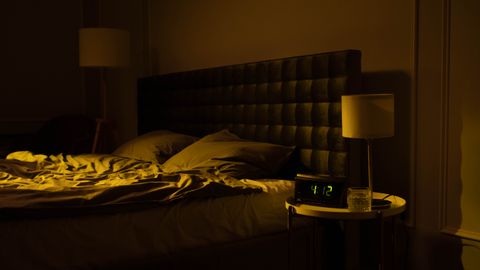
Core body temperature follows a strong circadian rhythm, peaking in the early evening and reaching its minimum a couple of hours before habitual waking — typically around four or five in the morning. The temperature minimum is one of the standard markers of circadian phase.
Sleep onset is tightly coupled to the falling limb of that curve. Sleep becomes easiest when core temperature is dropping fastest, and the rate of decline predicts sleep latency better than the absolute temperature does.
How the body cools itself
The mechanism is more specific than general heat loss, and it explains several otherwise contradictory pieces of sleep advice.
Core cooling is achieved primarily through distal vasodilation — opening the blood vessels in the hands and feet. These extremities have a high surface-area-to-volume ratio and contain arteriovenous anastomoses, direct connections between arteries and veins that allow large volumes of blood to be shunted to the skin surface for heat exchange.
Kurt Kräuchi and colleagues in Basel demonstrated that the distal-proximal skin temperature gradient — the difference between hand and foot temperature and trunk temperature — is the single best physiological predictor of how quickly a person falls asleep. Warm extremities relative to the core means heat is being dumped, core temperature is falling, and sleep follows.
Warming the feet promotes vasodilation, which increases heat loss from the core. The counter-intuitive result is that warm feet lower core temperature faster and shorten sleep latency. Studies of foot warming and of bed socks have found measurable improvements in sleep onset. Cold feet cause vasoconstriction, which traps heat in the core and delays sleep — which is why some people simply cannot fall asleep with cold feet.
The warm bath effect
The same mechanism explains why a hot bath before bed helps despite apparently raising temperature.
A meta-analysis by Shahab Haghayegh and colleagues examined water-based passive body heating and found that a bath or shower at around 40–43°C, taken one to two hours before bedtime, reduced sleep latency by an average of around ten minutes and improved subjective sleep quality.
The bath warms the skin, triggers vasodilation, and the subsequent heat loss produces a steeper decline in core temperature than would otherwise occur. The timing matters: taken immediately before bed, the core is still elevated and the effect reverses.
The room
Most guidance converges on roughly 16–19°C for a bedroom, which strikes many people as cold. Higher ambient temperatures interfere with the core cooling that sleep onset requires, and heat is a considerably more disruptive sleep environment than cold, because cold can be corrected with bedding and heat cannot be corrected once you have removed everything.
Studies of sleep during heatwaves consistently find reduced total sleep, reduced slow-wave sleep and increased wakefulness, with older adults and those in poorly ventilated housing most affected. A large analysis by Kelton Minor and colleagues using data from wearable devices across many countries found that rising night-time temperature was associated with measurable sleep loss globally, with the effect concentrated in warmer regions, older people, and lower-income countries.
REM and thermoregulation
A detail that is not widely known and has practical consequences.
During REM sleep, thermoregulation is substantially suspended. Shivering and sweating responses are markedly reduced or absent — the body behaves, briefly, more like a poikilotherm, drifting toward ambient temperature.
This is thought to relate to the intense central activity of REM, and it means the sleeping body is at its most vulnerable to environmental temperature precisely during the REM-rich second half of the night. It is part of why a room that was comfortable at midnight can produce awakening at four, and why bedding that traps heat causes problems disproportionately in the early hours.
Practical arrangements
Cool room, warm extremities. The combination that follows from the physiology. Socks with a cool room is not a contradiction.
Layer bedding rather than using one heavy duvet, so it can be adjusted without waking fully.
Bath 60–120 minutes before bed, warm rather than scalding.
Air movement matters as much as temperature in warm conditions. A fan improves comfort at temperatures where cooling is unavailable.
Breathable bedding. The evidence for specific materials is thin and commercially motivated, but the principle — that materials which trap moisture make heat worse — is sound.
In heat, cooling the extremities directly is effective: a cool shower before bed, or damp cloths on wrists and feet.
Where it goes wrong clinically
Several groups have impaired distal vasodilation and correspondingly more difficulty with sleep onset: older adults, in whom vascular responsiveness declines; people with Raynaud's phenomenon or peripheral vascular disease; and women during the menopausal transition, where vasomotor symptoms disrupt the whole system.
Menopausal night sweats are a thermoregulatory problem presenting as insomnia, and treating them as insomnia alone misses the mechanism. Cooling strategies, layered bedding, and — where appropriate — treatment of the vasomotor symptoms themselves address the actual cause.
Also by Nadia Eriksen
- What actually happens across a night of sleepSleep Science
- Your body clock is a physical structure, not a metaphorSleep Science
- Nightmares are treatable, and the treatment involves rewriting the endingNightmares & Disorders
- Are you really a night owl? What chronotype is and how much of it is fixedSleep Science