Sleep Science
Shift work and the clock that will not adapt
Around one in five workers in industrialised economies works outside standard hours. Full circadian adaptation is rare, and the reason is that everyone goes home to daylight on their days off.
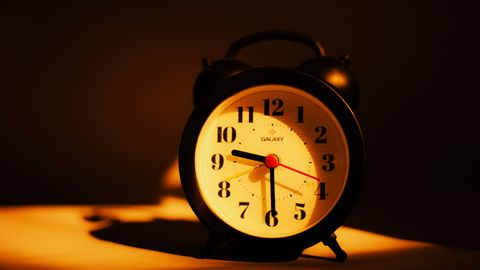
Shift work sleep disorder is a recognised circadian rhythm sleep-wake disorder: insomnia when trying to sleep, and excessive sleepiness during work hours, caused by a schedule that conflicts with the internal clock.
The core problem is that the suprachiasmatic nucleus is entrained principally by light, and a night worker's light exposure pattern is contradictory. They work under artificial light, commute home in morning daylight — which is a strong phase-advancing signal — and then sleep through the day, when the darkness signal should be arriving.
Field studies of permanent night workers consistently find that only a minority achieve substantial circadian adaptation. Most remain permanently misaligned, working at their circadian nadir and sleeping when their clock is signalling wake.
What that costs
Shift work is associated with a considerable list of outcomes, and the evidence is strong enough that the International Agency for Research on Cancer classified shift work involving circadian disruption as probably carcinogenic to humans.
The associations include cardiovascular disease, type 2 diabetes and metabolic syndrome, obesity, gastrointestinal disorders, depression, and — in some studies — breast and prostate cancer.
Mechanistically, controlled laboratory studies of circadian misalignment in healthy volunteers produce measurable changes within days: reduced insulin sensitivity, increased blood pressure, altered leptin and inflammatory markers. Frank Scheer and colleagues showed that misaligning behavioural and circadian cycles produced a prediabetic metabolic profile in healthy young adults inside ten days.
The accident and error risk is more immediate. Alertness at four in the morning, at the circadian nadir, is impaired to a degree comparable to significant alcohol intoxication. Several major industrial disasters occurred during night shifts, and the association between night work and road traffic accidents on the commute home is well documented.
Driving home after a night shift combines the circadian low point with accumulated sleep pressure and, frequently, a monotonous drive. Studies find substantially elevated crash risk. Where possible: wear dark sunglasses on the way home to block the phase-advancing morning light, arrange a lift or public transport after long shifts, and take a short nap before driving if sleepiness is significant.
Managing it
Full adaptation is usually not achievable. Damage limitation is.
Rotate forwards, not backwards. Morning to afternoon to night is easier than the reverse, because the human clock's natural period runs slightly longer than twenty-four hours and delaying is easier than advancing. Fast rotation — two or three days per shift type — or permanent shifts are both preferable to slow backward rotation.
Bright light during the first half of the shift. Strong light exposure early in the night shift promotes phase delay and improves alertness. Some workplaces install high-intensity lighting for this.
Dark on the way home. Wraparound sunglasses on the commute prevent morning light from undoing it.
A genuinely dark bedroom. Blackout blinds, eye mask, phone on silent, a note on the door. Daytime sleep is lighter and more fragmented than night sleep even under ideal conditions.
Anchor sleep. Keeping a fixed core period of sleep — say, four hours at the same clock time every day including days off — provides some stability, at the cost of the free-day lie-in.
Strategic napping. A nap before a night shift substantially improves alertness. A short nap during a shift, where permitted, is one of the better-evidenced countermeasures. Twenty minutes avoids grogginess; ninety completes a cycle.
Caffeine, used deliberately. Effective early in the shift, and counterproductive in the last few hours because it will still be circulating when the worker is trying to sleep.
Melatonin taken before daytime sleep can help sleep duration, with the usual caveat that timing determines direction of phase shift and getting it wrong is counterproductive.
Eating
An under-discussed component. The digestive system is under circadian control, and glucose tolerance is markedly worse at night. Eating a large meal at three in the morning produces a considerably worse metabolic response than the same meal at midday.
Practical suggestions from the occupational health literature: eat the main meal before the shift rather than during it, keep night-time intake light, avoid heavy or high-fat food in the small hours, and stay hydrated.
Time-restricted eating during shift work is an active research area with promising early findings and no settled recommendations yet.
Who should not do it
Some conditions make shift work substantially riskier: epilepsy, poorly controlled diabetes, significant cardiovascular disease, bipolar disorder — where sleep disruption is a well-established trigger for episodes — and pre-existing severe sleep disorders.
Tolerance also declines with age. Older shift workers show reduced circadian flexibility and more sleep disruption, and many leave shift work for that reason.
None of which helps the nurse, the driver or the machine operator who has no alternative. The honest summary is that shift work carries real costs, that the countermeasures are partial, and that the largest improvements available are usually in how the roster is designed rather than in what the individual does.
Also by Nadia Eriksen
- What actually happens across a night of sleepSleep Science
- Your body clock is a physical structure, not a metaphorSleep Science
- Nightmares are treatable, and the treatment involves rewriting the endingNightmares & Disorders
- Are you really a night owl? What chronotype is and how much of it is fixedSleep Science