Sleep Science
What Sharing A Bed Does To Both Sleepers
Couples usually report sleeping better together while measurements show more arousals, a split between felt and recorded sleep that shapes how bed sharing is studied.
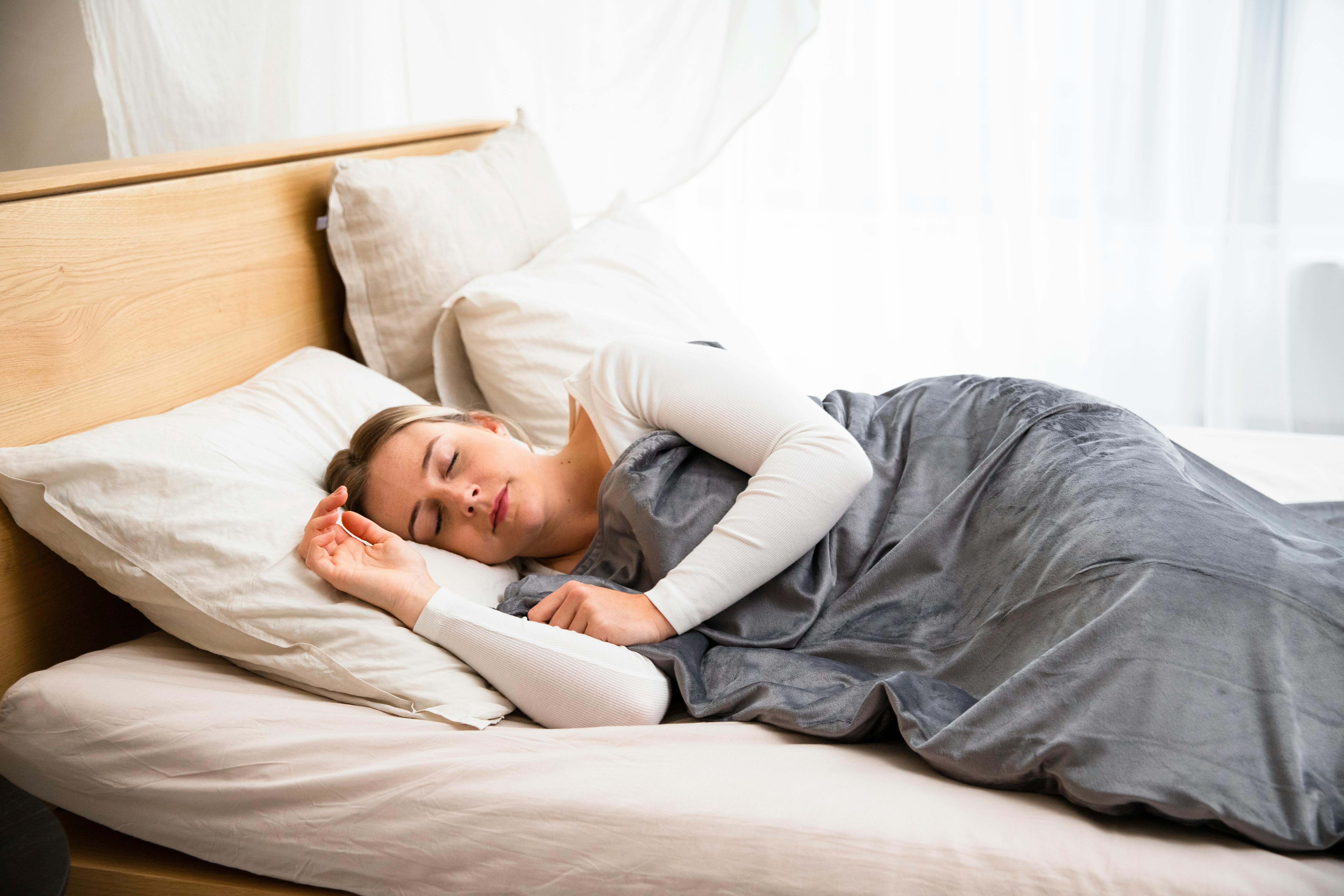
Most American adults in relationships share a bed, and the arrangement is rarely examined until something goes wrong. What measurement shows about shared sleep does not match what sleepers report.
Two bodies, one thermal system
Falling asleep depends on shedding heat from the core through the hands and feet, and a second body under the same covers adds a steady heat source.
People differ in the temperature at which they sleep comfortably, so one partner is frequently too warm while the other is not warm enough.
Separate blankets solve more of this than mattress choices do, which is why the practice is common across northern Europe and is spreading in the United States.
Movement transfers through the mattress
Everyone shifts position many times a night, mostly without waking. On a shared surface those shifts become an input to the other sleeper.
Innerspring mattresses transmit motion laterally through the spring system, while thick foam absorbs more of it. This is the mechanism behind motion isolation claims in mattress marketing.
Bed size does more than mattress material. Increasing the distance between sleepers reduces both the mechanical coupling and the thermal one.
The measurement gap
Laboratory recordings of couples generally show more brief arousals and more fragmented sleep when partners share a bed than when they sleep apart.
The same participants usually report that they slept better together and felt more rested. Subjective and objective measures point in opposite directions.
The likely explanation is that a familiar presence lowers the vigilance that keeps a solitary sleeper alert, and that felt security is not captured by an arousal count.
When one partner has a sleep disorder
Snoring and the pauses of sleep apnea disturb the bed partner more reliably than the person doing the snoring, which is why partners are so often the ones who raise it.
Restless legs and periodic limb movements produce repeated kicks that wake the other sleeper without registering as awakenings for the person moving.
A partner's description of loud snoring, gasping or breathing pauses is clinically useful information and a good reason to arrange an evaluation rather than simply move to the couch.
Sleeping apart as a deliberate arrangement
Couples increasingly separate sleeping spaces on purpose, an arrangement that gets called a sleep divorce even when the relationship is not in difficulty.
The trade is straightforward: fewer arousals and independent schedules against the loss of a shared routine that many couples value for reasons unrelated to sleep.
Neither arrangement is inherently better sleep hygiene. The useful question is which specific disturbance is being solved, because a snoring problem and a schedule mismatch call for different fixes.
Also by Nadia Eriksen
- What actually happens across a night of sleepSleep Science
- Your body clock is a physical structure, not a metaphorSleep Science
- Nightmares are treatable, and the treatment involves rewriting the endingNightmares & Disorders
- Are you really a night owl? What chronotype is and how much of it is fixedSleep Science