Sleep Science
Insomnia: the treatment that works is not a tablet
Cognitive behavioural therapy for insomnia outperforms sedatives in the medium and long term, and its most effective component is the one that sounds like the worst possible advice.
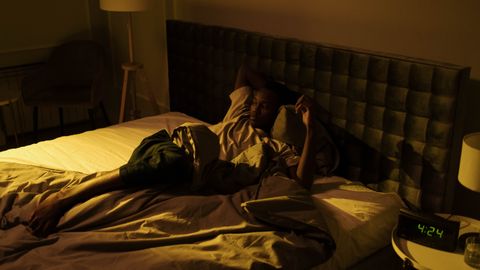
Chronic insomnia disorder requires difficulty falling asleep, staying asleep or waking too early, at least three nights a week, for at least three months, with daytime consequences. It affects roughly 10 per cent of adults, and a further 20 per cent or so have symptoms without meeting the full criteria.
The daytime clause matters. Sleeping six hours and feeling fine is short sleep, not insomnia. Sleeping six hours and being exhausted, irritable and unable to concentrate is a disorder.
The hyperarousal model
Insomnia is not simply an absence of sleep. Physiological measurements find people with chronic insomnia show elevated metabolic rate, higher cortisol and adrenocorticotropic hormone, increased high-frequency EEG activity during sleep, and greater sympathetic activation.
The system is running too hot to permit the transition into sleep. Which explains why sedating the brain into unconsciousness is a crude answer — it overrides the arousal without reducing it.
Arthur Spielman's 3P model describes how it becomes chronic. Predisposing factors — a naturally reactive stress system, a tendency to worry. Precipitating factors — a bereavement, a new baby, a job crisis. And perpetuating factors, which are the behaviours adopted to cope: going to bed earlier to catch up, lying in, napping, staying in bed awake hoping.
The crucial insight is that by the time insomnia is chronic, the original trigger is usually long resolved. What maintains it are the coping strategies. Which is why treatment targets those rather than the original stressor.
CBT-I is recommended as first-line treatment for chronic insomnia by the American College of Physicians, the European Sleep Research Society and NICE. Medication is positioned as short-term adjunct. In practice the prescribing order is frequently reversed, largely because a prescription takes two minutes and a referral takes a waiting list.
The components
Sleep restriction, better named sleep consolidation, is the most powerful and the most counter-intuitive. Someone spending nine hours in bed to obtain six hours of broken sleep is instructed to spend six and a half hours in bed. Sleep efficiency — time asleep divided by time in bed — rises. As it passes about 85 per cent, the window is extended by fifteen minutes.
It works by increasing homeostatic sleep pressure and by breaking the association between bed and frustration. It is unpleasant for one to two weeks, produces daytime sleepiness during that period, and needs care in anyone driving, operating machinery, or with epilepsy or bipolar disorder. It should be done with guidance.
Stimulus control re-establishes bed as a cue for sleep. Bed is for sleep only. If awake more than about twenty minutes, get up and go elsewhere, return when sleepy. No clock-watching. Same wake time every day regardless of the night.
Cognitive therapy targets the beliefs that maintain arousal: that eight hours is mandatory, that tomorrow will be ruined, that one bad night causes lasting harm. Catastrophic thinking about sleep is itself arousing, which is the trap.
Relaxation training — progressive muscle relaxation, breathing techniques, body scan — reduces the physiological component.
Sleep hygiene is the component everyone has heard of and the least effective on its own. As a standalone treatment it performs poorly in trials. It is necessary background, not therapy.
What the evidence shows
Meta-analyses find CBT-I produces reductions in time to fall asleep and time awake after sleep onset comparable to hypnotic medication in the short term, and superior beyond it — because drug effects stop when the drug stops, while behavioural change persists.
Digital CBT-I programmes have been tested in large randomised trials and produce meaningful effects, which matters enormously for access given that trained therapists are scarce almost everywhere.
About sleeping tablets
Z-drugs and benzodiazepines reduce sleep latency by roughly twenty minutes and increase total sleep by around half an hour in trials — real but smaller than most users expect. Tolerance develops within weeks. Rebound insomnia on stopping is common and is frequently mistaken for the underlying problem returning, which is how short courses become long ones.
They carry risks: next-day impairment, falls, cognitive effects, and complex sleep behaviours including sleepwalking and sleep-driving, which prompted regulatory warnings.
They have legitimate uses — a short course during an acute crisis, situational insomnia. Long-term nightly use for chronic insomnia is not supported by the evidence.
Newer orexin receptor antagonists work by blocking a wake-promoting system rather than by general sedation, and have a somewhat different profile. They are not a reason to skip CBT-I.
Paradoxical insomnia
A genuinely strange and under-recognised phenomenon. Some people report severe insomnia — barely sleeping — while polysomnography records normal sleep duration and architecture.
This is not malingering. It appears to reflect altered perception of sleep, possibly related to elevated cortical arousal during light sleep, such that the person experiences it as wakefulness. Sleep state misperception occurs to some degree in most insomnia, and knowing about it can itself be therapeutic — the night was probably not as bad as it felt.
What to do
Keep a sleep diary for two weeks: bed time, estimated sleep onset, awakenings, final wake time, out-of-bed time. It is the foundation of the treatment and it also reveals patterns the sleeper has not noticed.
Then ask for CBT-I specifically, by name. Digital programmes are available where clinicians are not, and they work.
Also by Nadia Eriksen
- What actually happens across a night of sleepSleep Science
- Your body clock is a physical structure, not a metaphorSleep Science
- Nightmares are treatable, and the treatment involves rewriting the endingNightmares & Disorders
- Are you really a night owl? What chronotype is and how much of it is fixedSleep Science